Tuesday, May 27, 2014

Chrome's 'OK Google' voice search rolls out to all

If

If you wanted to enjoy hands-free Google searching from your desktop, your only option was to install an extension or become an early tester. The downside was that you'd have to accept some additional bugs might come your way. No more -- Google has rolled out a Chrome update that integrates the company's now iconic "OK Google" command directly into the latest version of its browser and in Chrome OS. As long as you're based in the US or have Chrome set to US English, any time you visit the Google homepage or open a new tab, you can quickly say (or loudly shout, the choice is yours) "OK Google" to perform a search, ask a question or schedule a reminder. 

Read more..

via Engadget RSS Feed http://ift.tt/1gSbp0J

Samsung's mobile health app can now tell when you're stressed out


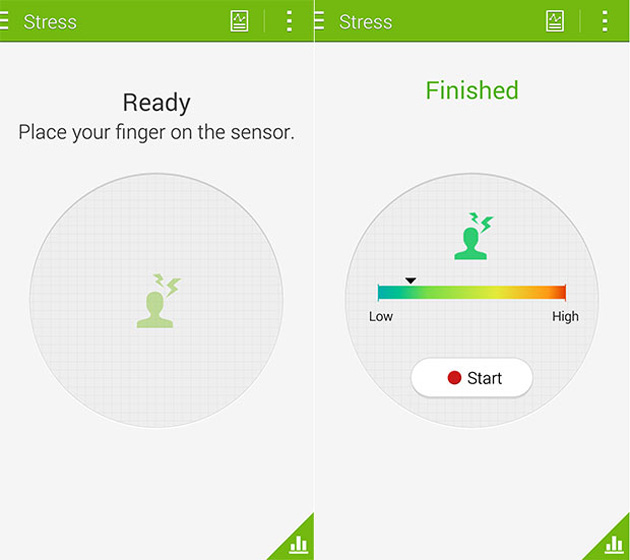
The Galaxy S5's heart rate sensor has mostly been handy for fitness gurus, but it's now helpful for the rest of us, too. Samsung has pushed out an update to S Health that uses the sensor to track stress levels; if your heart is racing after a bad day at work, you'll know. The app also tracks long-term trends, so it should be clear when you're overdue for a vacation. While S Health won't help you get rid of the annoying coworkers or personal dramas that cause stress, the app will at least make it clear that it's time to relax.


Read more..

via Engadget RSS Feed http://ift.tt/1tglBQH

Monday, May 26, 2014

Rest in peace Ubuntu for Android, we hardly knew ye

 
We can't say that the future of Ubuntu for Android ever looked particularly bright, but we were enamored with the concept. You'd walk around by day with a standard-issue Android phone in your pocket, but when you docked it to a keyboard, mouse and monitor, you were greeted with a full Ubuntu desktop experience. Well, Canonical has decided to put the project out to pasture apparently. Buried away in a recent bug report (now hidden frompublic view) was the fact that "Ubuntu for Android is no longer in development," and thus its landing page should be taken offline. Though some responses from the Canonical team appear to muddy the story, the take away is the same -- active development on Ubuntu for Android has come to a halt.


Read more..

via Engadget RSS Feed http://ift.tt/1kpklXV

Wednesday, May 21, 2014

This Video Shows What Caffeine Does to Your Brain and How Much Is Safe


Caffeine is a fascinating drug, one that many of us enjoy via coffee, tea, and other products. This video from the American Chemical Society is a quick look on how caffeine actually affects our bodies and how much is a safe dose .

Read more...

via Lifehacker http://ift.tt/1jnQQrM

The Untold Story of Larry Page’s Incredible Comeback


I thought you might like this article on Slate:


Everyone knows the Steve Jobs story—how he was fired from the company he founded, Apple, only to return from exile decades later to save the business.

What's less well understood is that Apple's board and investors were absolutely right to fire Jobs. Early in his career, he was petulant, mean, and destructive. Only by leaving Apple, humbling himself, and finding a second success—with Pixar—was he able to mature into the leader who would return to Apple and build it into the world's most valuable company.

Larry Page is the Steve Jobs of Google.


Like Jobs, Page has a co-founder, Sergey Brin, but Page has always been his company's true visionary and driving force. And just as Apple's investors threw Jobs out of his company, Google's investors ignored Page's wishes and forced him hire a CEO to be adult supervision.

Both then underwent a long period in the wilderness. Steve Jobs' banishment was more severe, but Page also spent years at a remove from the day-to-day world of Google. As with Jobs, it was only through this long exile that Page was able to mature into a self-awareness of his strengths and weaknesses.

Then, like Jobs, Page came back with wild ambitions and new resolve.

Control Arduino Projects with Your Voice and an Android Phone


Voice recognition is a one of the best ways to control Arduino projects, but it's not exactly easy to implement on your own. Instructables user ASCAS shows off how to add voice control to your Arduino projects using your Android phone and Bluetooth.

The Arduino gets a Bluetooth attachment and a set of code. Then you'll need 
Android Meets Robots, an app that lets you pair voice recognition with any Bluetooth module. From there, it's just about pairing the two together and creating your own commands.

Read more...

via Lifehacker http://ift.tt/1joUrG6

Word Lens, The Real-Time Translation App, is Now Free


Android/iOS: Word Lens, the app that can translate the words and language it sees in real time, is free to download today.

Google has purchased Word Lens' parent company, Quest Visual, and their first move was making the app free to download. 

Read more...


via Lifehacker http://ift.tt/1oPvUgJ